
See what it really costs to take your shop online in 2025. Compare DIY, marketplaces, platforms, and managed services with a clear ROI breakdown. Start smart.
You already know customers expect to browse and buy from their phones, even when they love your brick-and-mortar. The opportunity is big and still growing. Global ecommerce sales are forecast to reach $6.419 trillion in 2025, according to Shopify’s summary of the eMarketer forecast, as outlined in the Global Ecommerce Sales Growth Report (2025) from Shopify. In the United States, the U.S. Census Bureau reports that ecommerce accounted for 16.3 percent of total retail in Q2 2025, up 5.3 percent year over year, per the Quarterly Retail E‑Commerce Sales.
Still, the path you choose to get online will determine your cost, your control, and your return. This guide breaks down four approaches local retailers commonly consider in 2025, what they really cost, and how to think about ROI.
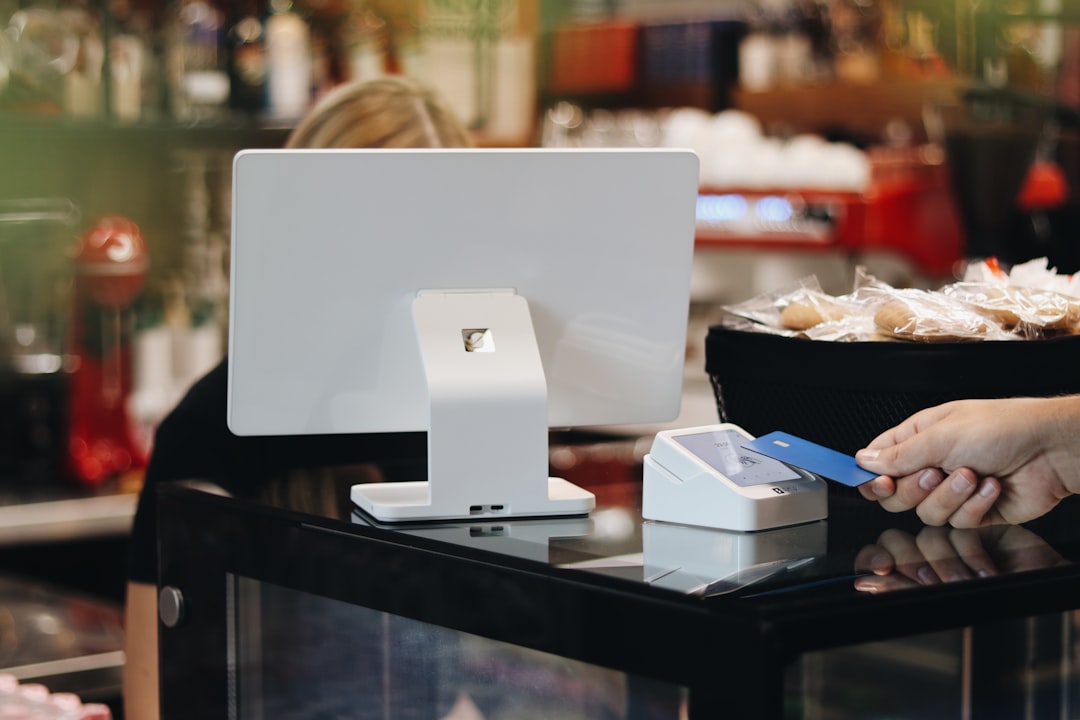
The four common paths to selling online
DIY stack. You assemble the site and integrations yourself, often with WordPress and WooCommerce. You own the stack and can keep subscription costs low, but you invest your own time or pay freelancers for setup and upkeep.
Marketplace. You list on Amazon, Etsy, and similar. Reach is built in. Fees and competition are high and brand control is limited.
All-in-one platform. You use a hosted platform such as Shopify or BigCommerce. Faster time to value with predictable fees, wide app ecosystems, and solid checkout.
Managed, turnkey service. You hire a partner to plan, build, integrate, launch, and support. This removes technical lift and accelerates execution while keeping total cost of ownership predictable.
Cost reality in 2025: upfront, monthly, and per-order fees
DIY with WooCommerce
DIY can be cost effective if you value control and have time to tinker. Quality hosting typically starts around $250 per year, as the WooCommerce pricing guide notes in its 2025 update on total cost of ownership from WooCommerce. You will also budget for a domain, a theme if you go premium, and paid extensions for shipping, taxes, or inventory if you need them. Payment processing is extra. Standard online card fees are commonly 2.9 percent plus 30 cents, which is clearly listed on Stripe’s pricing. PayPal’s published business fees show 3.49 percent plus a fixed 49 cents for PayPal Checkout in the U.S., detailed in PayPal’s merchant fees.
What this means: if your store primarily relies on organic traffic, local search, and email, DIY can keep fixed costs low. If you anticipate heavy advertising or rapid catalog changes, factor in your time or a developer retainer.
Marketplace exposure and fees
Marketplaces are attractive because customers are already there, yet fees add up. Amazon’s fee schedule shows a Professional plan at $39.99 per month and referral fees that commonly range from 8 percent to 15 percent by category, with some higher tiers and a 30 cent minimum per unit, per the official Amazon Seller Central fee schedule. Etsy charges 20 cents per listing plus a 6.5 percent transaction fee on the item price and shipping, as explained in Etsy’s Fees and Payments Policy. Payment processing on marketplaces varies by program, and marketplaces may also charge advertising or offsite ad fees.
What this means: marketplaces can be excellent for testing products, clearing seasonal inventory, or stacking on top of your own site. For long-term margins and brand equity, many retailers prefer marketplaces as a secondary channel.
Platform simplicity and predictability
Hosted platforms bundle hosting, security, and checkout. Shopify’s published pricing shows the Basic plan at $29 per month when billed annually, with card rates starting at 2.9 percent plus 30 cents online, as listed on Shopify’s pricing page. The platform also offers promotional $1 trials for the first three months periodically. You can extend functionality with apps, many of which are free or subscription based. If you choose a third-party gateway instead of the platform’s native payments, an additional transaction fee may apply, which is explained under third-party provider fees on the same Shopify pricing page.
If you want a fast, low-friction start on a modern, reliable stack, a platform is hard to beat. If you plan to build on Shopify, you can start a trial here: Shopify.
Managed, turnkey service
A managed service takes the planning, building, and integration work off your plate. For example, StoreStudio is a turnkey ecommerce enablement partner for local retailers that handles end-to-end store setup, inventory synchronization, local delivery integration, and brand-aligned design, then provides ongoing support. The result is speed to launch and operational continuity. StoreStudio’s typical project for about 100 products can be launched in roughly two weeks, according to the company’s own site content, with post-launch support keeping the storefront and integrations running smoothly. You can learn more about the approach on About StoreStudio and ask questions via Contact. The team also shares practical tips and case stories on the StoreStudio blog.
What this means: if you are time strapped and want results without wrestling with plugins, taxes, and feeds, a managed service compresses the timeline and reduces risk, often at a comparable total cost of ownership to piecemeal builds once you account for your time and missed sales during delays.

The hidden costs that affect ROI
Beyond platform or marketplace fees, your actual return comes down to three areas: traffic cost, conversion efficiency, and operations.
Traffic cost. Digital ad prices are rising across many industries. WordStream’s 2025 benchmarks report that 87 percent of industries saw CPC increases in Google Ads, averaging a 12.88 percent rise year over year, while Meta lead CPC rose modestly overall, per the WordStream 2025 Facebook Ads Benchmarks. If you rely heavily on paid acquisition, expect higher CAC and slower payback without strong retention.
Conversion efficiency. The average retail ecommerce conversion rate still hovers around 2.9 percent overall, with 2.8 percent on mobile and 3.2 percent on desktop, according to the 2025 update from Smart Insights. Site speed, merchandising, reviews, and frictionless checkout matter. So do convenience features like BOPIS and local delivery options.
Operations. Returns, shipping, and stockouts quietly eat margin. McKinsey’s 2025 delivery survey finds 90 percent of consumers are willing to wait two or three days when it avoids shipping costs, and they value reliable on-time delivery even more than absolute speed, per McKinsey. Stockouts are especially costly, with Harvard Business Review citing estimates that stockouts cost retailers nearly one trillion dollars annually worldwide, as summarized in an HBR article that references RetailDive’s analysis in its discussion of out-of-stock issues from Harvard Business Review.
Concrete per-order math to frame decisions
Let’s use a simple example so you can compare apples to apples. Say your average order value is $50 and your gross margin is 55 percent. That leaves $27.50 gross profit per order before fees. For simplicity, ignore packaging, pick-and-pack labor, and ad spend to isolate platform-level comparisons.
DIY or platform with direct payments. A typical online card fee of 2.9 percent plus 30 cents costs about $1.75 on a $50 order per Stripe’s pricing. Net contribution before overhead: $25.75. PayPal Checkout is typically 3.49 percent plus $0.49 per PayPal’s business fees, about $2.24 on $50, netting $25.26. Monthly platform or hosting fees then spread across your order volume.
Marketplace. If your referral fee is 15 percent, that is $7.50, and some categories include additional fees. Net contribution before overhead: $20.00. You may also pay a monthly plan fee such as Amazon’s $39.99 per Amazon fee schedule, plus storage or fulfillment fees if you use FBA.
In other words, marketplaces trade reach for margin. Your own checkout preserves margin but requires generating traffic. That is why many healthy retail mixes combine their own site for brand and margin with marketplaces to capture incremental demand.

The 2025 conversion and convenience levers that move ROI
Meet hybrid shopping expectations. Buy online, pickup in store or curbside is now mainstream. Shopify’s 2025 BOPIS guide notes that 38 percent of consumers buy online then collect in store, and that click-and-collect retail sales are projected to reach $154 billion in the U.S. by 2025, per Shopify Retail. Implementing BOPIS is not just a convenience perk; it reduces last mile costs and drives add-on in-store purchases.
Make your in-store inventory visible on Google. According to Google Merchant Center’s overview of local inventory ads and free local listings, retailers see a 21 percent increase in store visits and 9 percent increase in online conversions for products available in store when they run local inventory ads alongside Shopping ads, as described in the Google Merchant Center help. This is a fast, concrete way to turn nearby searches into orders and pickups.
Keep inventory in sync to prevent stockouts. Unified inventory across POS and ecommerce avoids cancellations and disappointed customers. The HBR overview above underscores the real cost of stockouts. Managed setups that integrate POS, ecommerce, and delivery partners reduce that risk.
Align delivery promises with customer priorities. McKinsey’s research shows most shoppers favor reliable, low-cost delivery over absolute speed, especially with transparent updates and flexible options, per McKinsey. Offering free standard shipping thresholds, BOPIS, and local delivery windows can lift conversion without crushing fulfillment costs.
Time to launch is an ROI driver too
Every week you are not live is a week of online revenue you cannot capture, and a week where shoppers may choose a competitor. A DIY or fragmented vendor approach can stretch to months if you are juggling product data, images, taxes, shipping, and POS sync in spare hours. A focused two to three week build with integrated inventory and delivery can pay for itself quickly if you have even modest demand. That is the appeal of a managed, productized service like StoreStudio, which specializes in getting local retailers transacting online fast, then stays to monitor and optimize integrations. The brand’s differentiation is simplicity, speed, and completeness, and the published social proof claims such as thousands of stores and millions of products onboarded help de-risk your decision. If you want an introduction to the process and outcomes, the About page and Blog provide more context, and you can request a quick scoping call via Contact.
How to choose the path that fits your store
You prize control and can commit time. A DIY WooCommerce build can keep fixed costs low and give you deep control. Expect to invest sweat equity, and use reliable extensions and hosting. The WooCommerce pricing guide’s estimate that quality hosting starts around $250 per year is a reasonable anchor for the infrastructure portion from WooCommerce. Pair with a straightforward processor, per Stripe pricing or PayPal fees.
You want speed and predictability. A hosted platform such as Shopify gets you live quickly with a modern checkout. The annualized Basic plan pricing and card fees are clear on Shopify’s pricing. If that is your direction, start a trial and validate the fit here: Shopify.
You want baked-in demand to test a product line. Start a marketplace listing. Budget for the margin hit and remember that marketplaces are not substitutes for building your brand. The Amazon fee schedule and Etsy fee policy quantify the tradeoffs.
You want results without the tech headache. Consider a managed partner. StoreStudio handles strategy, build, catalog preparation, POS and inventory sync, local delivery integration, and support. You get a brand-aligned storefront and the operational plumbing that reduces future fires. Visit StoreStudio to explore whether the turnkey model is the right economic and operational fit for your team.

Bottom line
In 2025, the economics of going online are not just about monthly software costs. They are about total cost of ownership, time to launch, margin preservation, and the operational details that lift conversion and reduce friction. Your own storefront with direct payments preserves contribution per order, while marketplaces trade margin for reach. Platforms compress setup time and provide reliable infrastructure, while a managed service compresses time even further and de-risks implementation so you can focus on merchandising, service, and growth.
Whichever path you choose, anchor your ROI on what shoppers care about now. The latest research shows reliable, low-cost delivery wins over raw speed, per McKinsey. Make in-stock items easy to find near your store, which Google’s local inventory programs show can increase store visits and online conversions for products available in store, per Google Merchant Center. Keep your operations synced to avoid stockouts, which hurt more than this week’s revenue, as highlighted by Harvard Business Review. And remember that conversion is a marathon, not a sprint, with the 2025 benchmark still around 2.9 percent overall, per Smart Insights.
If you prefer a partner that makes all of this simple, fast, and affordable for local retailers, explore how StoreStudio can help.